A Guide to Hojicha: The Comforting Roasted Green Tea
Imagine a tea that feels like a warm, comforting embrace in a cup. That is hojicha. Unlike its bright green relatives, this special Japanese tea has a beautiful reddish-brown hue and a soothing, nutty aroma, a gentle invitation to a quiet moment.
Discover the Comforting World of Hojicha

When you imagine Japanese green tea, a fresh, grassy flavour likely comes to mind. Hojicha invites you to set that idea aside and experience something different. It begins its journey as a green tea, but a final roasting step transforms it, creating a flavour that is smooth, toasty, and deeply satisfying.
This gentle nature makes hojicha the perfect companion for any time of day. Because it is naturally low in caffeine, you can enjoy a cup in the afternoon or evening without concern for your sleep. It is an ideal choice for a calming daily ritual.
A Sensory Experience
Preparing and enjoying hojicha is a ritual in itself. It is more than just a drink; it is an invitation to slow down and connect with the present moment. The experience engages the senses, from the earthy aroma of the roasting leaves to the deep amber colour of the brewed tea.
A cup of hojicha offers a clean, silky sip that soothes the rhythm of your day. It is a moment of quiet warmth, a simple pleasure that asks only for your presence.
The taste is remarkably smooth, with notes of caramel, toasted nuts, and a touch of natural sweetness. Unlike many other green teas, it has almost no bitterness, making it incredibly approachable. This unique character makes it a wonderful starting point for anyone new to the world of Japanese teas.
Versatility in Every Sip
Hojicha's charm extends far beyond a simple brew. Its roasted flavour lends itself beautifully to culinary creations, adding a sophisticated depth to both sweet and savoury dishes.
- Warm Lattes: Whisk hojicha powder with steamed milk for a creamy, comforting latte.
- Creative Desserts: Its nutty notes are a perfect match for ingredients like chocolate, vanilla, and caramel in cakes, ice creams, and custards.
- Savoury Dishes: A sprinkle of hojicha can add a unique, smoky touch to roasted vegetables or marinades.
As you explore this versatile tea, you will find it fits seamlessly into a life centered around mindful enjoyment. It is a beautiful example of how a simple act like roasting can create something truly special. For those looking to go deeper into mindful rituals, you can explore more on our learning page. This journey into hojicha is just the beginning of discovering a calmer way of living.

The Resourceful Origins of a Japanese Classic
Every cherished tradition has a story, and the tale of hojicha is one of beautiful, practical innovation. Its journey begins not in esteemed tea ceremonies, but in the bustling merchant houses of Kyoto in the 1920s. This was a time of resourcefulness, where nothing of value was wasted.
At the end of the tea harvest, merchants had a collection of leftover leaves, stems, and twigs. These parts, while from the same high-quality tea plants, were not considered refined enough for premium teas. Unwilling to discard them, a clever tea merchant had a simple yet brilliant idea: to roast them.
This single act of roasting the leftover parts over charcoal created something entirely new. The intense heat transformed the coarse, forgotten pieces into a tea with a deep, reddish-brown hue and an irresistibly comforting, toasty aroma.
A Tea for Everyone
The roasting process did more than change the tea's colour and scent; it fundamentally altered its chemical makeup. Most notably, the high heat reduced much of the caffeine and mellowed the sharp, grassy bitterness often found in other green teas.
This transformation made hojicha exceptionally gentle and easy to drink. It quickly became a beloved beverage for people of all ages, from children to the elderly, who could enjoy its soothing warmth at any time of day.
Hojicha is a testament to the Japanese concept of mottainai, a deep-seated cultural value of regretting waste and finding purpose in all things. It is a drink born from a profound respect for the harvest.
This humble origin story is precisely what makes hojicha so special. It was not created for nobility or ceremony; it was born from the practical need to honour the entire tea plant. That spirit of inclusivity and warmth is woven into every cup.
From Humble Beginnings to Modern Staple
From its resourceful beginnings in Kyoto, hojicha’s popularity quietly spread across Japan, becoming a comforting staple in homes and cafes. Its story is connected to broader trends in Japanese tea production. While the country's overall tea production has seen a decline, with planted tea areas shrinking from 49,000 hectares in 2004 to 41,000 hectares in 2019, the appreciation for unique, culturally significant teas like hojicha continues to grow.
This history of resourcefulness and mindful consumption resonates with modern wellness philosophies. It reflects a desire for simplicity and authenticity. The thoughtful creation of hojicha aligns perfectly with traditions that prioritise balance. To delve deeper into this connection, you might find it interesting to read about the secrets of Japanese longevity and ageless vitality.
Today, hojicha stands as a beautiful example of how thoughtful innovation can turn the overlooked into the treasured. It’s a quiet reminder that sometimes, the most wonderful discoveries come from making the most of what you already have.
How Roasting Transforms Green Tea into Hojicha
Hojicha’s unique character is born in fire. While most Japanese green teas are prized for their fresh, vibrant qualities, hojicha undergoes one final, crucial step: roasting. This is a complete metamorphosis that changes the tea's colour, aroma, flavour, and even its chemical makeup.
The journey starts with carefully chosen green tea leaves. The base is often Bancha, a tea from a later harvest known for its sturdy, mature leaves. Sometimes, Sencha or even twigs and stems from the tea plant are used, a nod to the resourceful tradition from which hojicha first emerged.
These green leaves are then roasted at a high temperature, typically around 200°C. The intense heat immediately stops any oxidation. As they tumble in the roaster, a beautiful and aromatic change begins.

The Alchemy of Heat
Roasting is where the transformation happens. The high heat triggers significant chemical changes within the tea leaves. Catechins, the antioxidants responsible for the sharp taste in many green teas, break down. This is why hojicha is so incredibly smooth and gentle, with almost no bitterness.
At the same time, the roasting creates new aromatic compounds called pyrazines. These are the same compounds that give coffee its rich scent and toast its comforting aroma. This process is the source of hojicha's signature nutty, caramel-like fragrance.
The visual shift is just as dramatic. The leaves transform from a lively green to a warm palette of reddish-brown and deep amber. This rich, earthy colour is a direct reflection of the deep, comforting flavour waiting in your cup.
The infographic below breaks down this simple yet profound transformation.
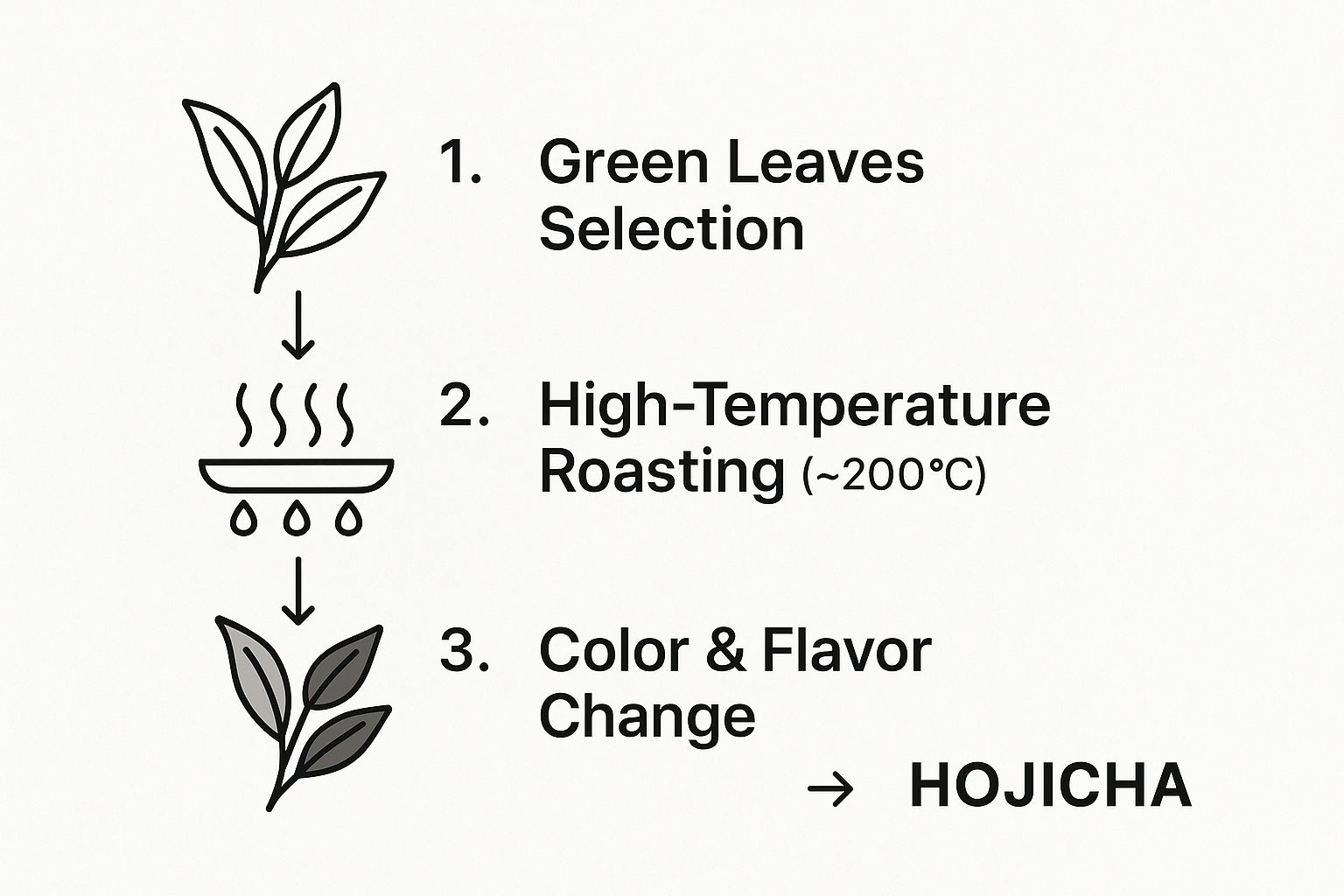
It clearly shows how one single step - roasting - is responsible for creating an entirely new tea experience from a familiar green leaf.
Craft and Precision in Roasting
The roasting method also plays a large part in the final flavour. While the tradition began with roasting over charcoal, modern methods often use specialised drum roasters for consistency and control.
- Traditional Charcoal Roasting: This classic method requires immense skill. The tea master must carefully manage the heat to ensure the leaves are roasted evenly without burning, resulting in a tea with complex, smoky undertones.
- Modern Drum Roasting: Most hojicha today is made in gas-fired or electric rotating drum roasters. This allows for precise temperature control, ensuring each batch has a consistent flavour.
Regardless of the method, the skill of the tea artisan is crucial. They must know the exact moment to stop the roasting to achieve that perfect balance of toasty flavour and delicate sweetness. You can learn more about our commitment to sourcing by reading about our ingredients.
The quality of the initial green tea is also vital. Japan's tea cultivation is heavily concentrated in a few key regions, with over 40% of all Japanese tea coming from Shizuoka Prefecture. Although hojicha isn't tied to one specific place, it relies on the quality of green teas grown in areas like Shizuoka and Kyoto, where the climate and soil create exceptional leaves.
From a simple green leaf to a rich, amber brew, the making of hojicha is a beautiful example of how heat and craftsmanship can create something truly special.
The Gentle Wellness Benefits of Hojicha

In a world filled with intense stimulants, hojicha offers a quieter path to well-being. Its quality is not in a powerful jolt of energy, but in a gentle, steady sense of calm and focus. This makes it a perfect companion for your daily rituals, whether starting the morning with intention or winding down at night.
The secret to hojicha’s gentle nature is its very low caffeine content. The high-temperature roasting process naturally breaks down most of the caffeine in the green tea leaves, leaving a brew that soothes rather than stimulates. That is why you can comfortably enjoy a warm cup in the late afternoon or even before bed.
Calm Focus from L-Theanine
While the roasting reduces caffeine, it carefully preserves L-theanine, a unique amino acid found in tea. L-theanine is known for promoting a state of relaxed alertness, a calm, clear focus without the jittery side effects that can sometimes come with caffeine.
This special combination allows hojicha to support your concentration in a balanced way. It helps quiet the mind’s background noise, inviting a more present and centered state.
A controlled study in Japan looked into how green tea and hojicha affect mental performance. While both teas improved accuracy in arithmetic tasks compared to just hot water, hojicha had a unique edge. It helped sustain concentration without causing feelings of uneasiness, and participants also reported feeling less fatigue. You can discover more about these interesting findings on hojicha and mental focus.
The Role of Antioxidants
The roasting process also changes the tea's antioxidant profile. Catechins, the powerful compounds responsible for the astringent taste of many green teas, are significantly reduced by the heat. This is what gives hojicha its famously smooth, non-bitter flavour.
This does not mean hojicha is without benefits. It still contains antioxidants that may support overall well-being. While the levels are lower than in unroasted green teas, hojicha offers a gentle, comforting source of these beneficial compounds. For a deeper look into the properties of unroasted green tea, you might enjoy our article on matcha, a green elixir full of antioxidants.
A ritual that fits into a quiet moment, but lasts the entire day. For a clean, serene focus that asks for nothing but your presence.
To help you choose the right tea for your ritual, it is helpful to see how hojicha stands next to its more famous green tea relatives.
Hojicha vs Matcha and Sencha: A Quick Comparison
This table breaks down the key differences between these popular Japanese teas, highlighting what makes each one unique.
| Characteristic | Hojicha | Matcha | Sencha |
|---|---|---|---|
| Colour | Reddish-brown, amber | Bright, pastel green | Light to deep green |
| Flavour | Toasty, nutty, caramel | Umami, sweet, grassy | Grassy, slightly bitter |
| Caffeine | Very Low | High | Medium |
| L-Theanine | Present | Very High | Present |
| Preparation | Steeped leaves or powder | Whisked powder | Steeped leaves |
| Best For | Evening, relaxation | Morning, calm energy | Daily, refreshing drink |
This comparison showcases hojicha’s unique place in the world of tea. It offers a distinct flavour and a gentle presence that sets it apart, making it the perfect choice for anyone seeking warmth, comfort, and a moment of peaceful reflection.
Creating Your Hojicha Brewing Ritual
Brewing hojicha is more than just making a drink. Consider it a five-minute ritual that invites a moment of calm into your day. It is a small act of presence, a chance to slow down and connect with your senses. This simple practice can turn a cup of tea into a meaningful moment of quiet.
The beauty of a hojicha ritual is its simplicity. It does not ask for complex tools or techniques, only your attention. As you prepare your tea, you naturally engage with the elements, the warmth of the water, the earthy scent of the leaves, and the deep amber colour of the liquid.
Crafting a Creamy Hojicha Latte

For days when you crave something richer, a hojicha latte is a wonderfully comforting alternative. Using hojicha powder creates a silky, frothy texture that feels both indulgent and soothing.
For you who desire a peaceful start to the day. A ritual that fits into 5 minutes.
Creating Your Latte:
- Make a Paste: Sift 1-2 teaspoons of hojicha powder into a bowl. Add a small amount of hot water (around 80°C) and whisk until you have a smooth paste. A bamboo whisk, or chasen, works beautifully for this.
- Warm Your Milk: Gently heat and froth your milk of choice. Oat and almond milk are lovely partners for the nutty notes of hojicha.
- Combine and Serve: Pour the warm, frothed milk over your hojicha paste. Stir gently. If you like, add a touch of sweetener like maple syrup.
This simple process creates a café-quality latte at home, perfect for a slow morning or a relaxing afternoon break. By focusing on each step, you turn the preparation into a mindful practice, an intentional act of self-care.
Bringing Hojicha into Your Kitchen
The journey with hojicha does not have to end in your teacup. Its unique roasted, nutty flavour makes it a wonderful ingredient for the creative kitchen, adding a gentle, sophisticated depth to both sweet and savoury dishes. Moving beyond the brew opens a world of culinary possibilities.
Using hojicha powder is the easiest way to weave its character into your recipes. The fine, silky texture dissolves beautifully, allowing you to fold its warm, earthy notes into all sorts of creations. This is a chance to experiment and bring a touch of Japanese-inspired warmth to your favourite meals.
Sweet Hojicha Inspirations
The subtle sweetness and toasty character of hojicha are a natural match for desserts. It pairs beautifully with creamy textures and rich flavours, offering a sophisticated alternative to ingredients like chocolate or vanilla.
- Creamy Hojicha Lattes: A simple blend of hojicha powder, steamed milk, and a touch of sweetener creates a comforting café-style latte.
- Hojicha Infused Ice Cream: Swirling hojicha paste into a vanilla ice cream base results in a dessert with nutty, caramel-like undertones.
- Elegant Baked Goods: Add a spoonful of hojicha powder to your recipes for cakes, cookies, or brownies. It lends a subtle smokiness that balances the sweetness.
If you are curious about how other green teas shine in the culinary world, you can explore various Asian cakes featuring green tea flavors like matcha to see how these unique tastes are celebrated in baking.

Exploring Savoury Hojicha Dishes
While its partnership with sweets is intuitive, hojicha’s versatility truly shines in savoury applications. Its smoky, earthy quality can add an unexpected layer of complexity to everyday dishes.
Think of it as a seasoning that brings a gentle, roasted depth.
Hojicha in the kitchen is an invitation to play with flavour. A sprinkle can transform a simple dish into something memorable, adding a quiet warmth.
A Few Savoury Ideas:
- As a Spice Rub: Mix hojicha powder with salt, pepper, and garlic powder to create a unique rub for roasted vegetables like carrots or sweet potatoes.
- In Broths and Soups: A small amount of hojicha can add an earthy dimension to noodle broths or creamy vegetable soups.
- In Dressings: Whisk a little hojicha powder into a simple vinaigrette to add a nutty note to salads.
Perfect Pairings and Mindful Additions
Hojicha’s flavour profile complements a wide range of ingredients. It pairs wonderfully with light pastries, dark chocolate, and autumn fruits like pear and apple. For those who enjoy a twist on classic desserts, our Matcha Tiramisu recipe offers a beautiful example of how Japanese tea powders can reimagine a beloved favourite.
To elevate your creations even further, consider integrating other mindful ingredients. Adding a sprinkle of maca for an earthy boost or turmeric for a warm, golden hue can enhance both the flavour and intention of your dish. You can explore our superfoods to find the perfect complement for your kitchen adventures.

Your Hojicha Questions Answered
We receive many questions about hojicha, especially from people trying it for the first time. To help you get to know this unique tea better, here are clear answers to the most common questions.
How Much Caffeine Is in Hojicha Compared to Coffee?
One of hojicha's key qualities is its low caffeine content. A typical cup contains only about 7.7 mg of caffeine, which is a tiny fraction of what you would find in other daily drinks.
To put that into perspective, an average cup of coffee can contain 95 to 200 mg of caffeine. This significant difference makes hojicha a wonderful choice if you are sensitive to caffeine, or want a warm drink in the afternoon or evening without it affecting your sleep. It offers a moment of calm without disrupting your body's natural rhythm.
Is Hojicha Suitable for an Evening Drink?
Absolutely. With its very low caffeine content, hojicha is the perfect companion for an evening ritual. The roasting process removes most of the stimulants found in green tea, leaving a gentle, soothing brew that helps you unwind and prepare for a good night's rest.
Its warm, nutty flavour and comforting aroma create a sense of peace, making it an ideal companion for a quiet moment before bed. It is a ritual that signals to the mind and body that it is time to slow down.
How Does Hojicha Taste Compared to Other Japanese Teas?
Hojicha stands apart from its green tea cousins like matcha or sencha. While sencha is known for its fresh, grassy notes and matcha for its deep, umami richness, hojicha offers a completely different experience.
- Taste: Think toasty, nutty, and even a little caramel-like. It’s warm and inviting.
- Bitterness: There is virtually no bitterness or astringency, which makes it incredibly smooth.
- Aroma: The scent is earthy and comforting, often compared to freshly roasted nuts or a light coffee.
This unique combination makes hojicha wonderfully approachable, offering a comforting experience unlike any other Japanese tea.
At Materia, we invite you to explore the comforting world of Japanese teas and mindful rituals.
Discover our Matcha Powder & Accessories collection to enhance your daily practice.